Spark Plug Types Compared: Copper, Platinum, Iridium, and Ruthenium
Everyone says iridium lasts longer but nobody does the actual cost calculation over 100,000 miles including labor. Here is the math, plus a practical guide to which type belongs in your car.
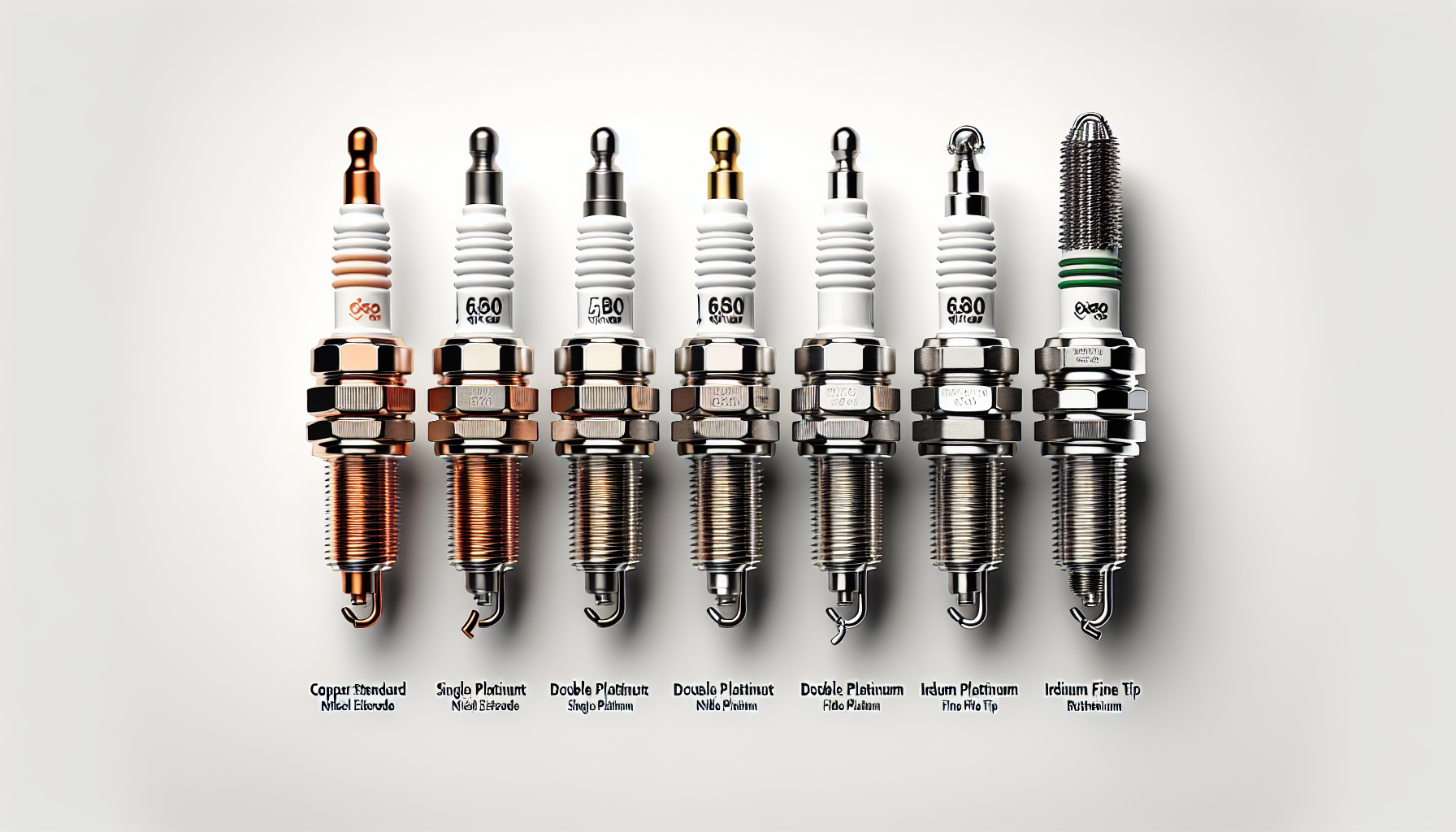
Left to right: copper, single platinum, double platinum, iridium, ruthenium. Note the increasingly fine electrode tip from left to right.
All Five Types: Complete Comparison
| Type | Cost Per Plug | Lifespan | Electrode | Best For | Total Cost (100k mi, 4-cyl) |
|---|---|---|---|---|---|
| Copper | $2 - $5 | 30,000 mi | 2.5mm nickel | Older vehicles, short-term use | $400 (4 jobs) |
| Single Platinum | $5 - $10 | 60,000 mi | Platinum centre | Late 1990s-2000s wasted-spark | $260 (2 jobs) |
| Double Platinum | $8 - $15 | 80,000 mi | Platinum both ends | Distributor ignition systems | $160 (1-2 jobs) |
| IridiumBest Value | $8 - $15 | 100,000 mi | 0.4mm iridium tip | Most modern cars, daily drivers | $140 (1 job) |
| Ruthenium | $10 - $20 | 120,000 mi | Ruthenium fine-wire | High-mileage keepers, performance | $120 (1 job) |
Total cost over 100,000 miles assumes a 4-cylinder car at an independent shop. V6 and V8 savings are larger due to higher labor costs per service.
The Total Cost of Ownership Calculation
Scenario: 4-cylinder car, independent shop, $85/hr labor. Over 100,000 miles of ownership.
Copper Plugs
Service 1 (0 mi): $100
Service 2 (30k mi): $100
Service 3 (60k mi): $100
Service 4 (90k mi): $100
TOTAL OVER 100K MILES
$400
Platinum Plugs
Service 1 (0 mi): $130
Service 2 (60k mi): $130
No service at 100k
TOTAL OVER 100K MILES
$260
Iridium Plugs
Service 1 (0 mi): $140
No service until 100k
One service total
TOTAL OVER 100K MILES
$140
The verdict: Iridium saves $260 per 100,000 miles over copper on a 4-cylinder
On a V6 where each service costs $250 to $350, the savings are even larger. Three copper jobs at $300 each = $900. One iridium job at $220 = $220. Iridium saves $680 over 100,000 miles on a V6. The math is not close. The only reason to choose copper is if you are selling the car soon.
Copper Spark Plugs
Best conductivity, cheapest upfront, shortest life
Copper has the highest electrical conductivity of any plug material. The downside is a thick 2.5mm nickel electrode that burns off quickly. Modern engines run hotter and with tighter fuel metering, eroding copper electrodes faster than older engines did. At $2 to $5 per plug, a set of four costs $8 to $20. But replacing them every 30,000 miles means 3 to 4 visits to the shop per 100,000 miles. Use copper only if your vehicle specifically requires it or you are selling the car within the next 15,000 miles.
Single Platinum Spark Plugs
Middle ground for wasted-spark ignition systems
Single platinum plugs have a platinum disc welded to the center electrode, extending service life to 60,000 miles by resisting electrode erosion. They became factory standard on most vehicles from the mid-1990s through mid-2000s. If your car's manual specifies platinum, use platinum. Upgrading to iridium is usually fine. Downgrading to copper is not recommended on any vehicle that specifies platinum.
Double Platinum Spark Plugs
Required for distributor-based ignition systems
Double platinum adds a platinum coating to both the center and ground electrodes. This matters specifically on older vehicles with distributor-based ignition where the spark jumps in both directions. In these systems, the ground electrode erodes just as quickly as the center electrode, so single-sided platinum is not sufficient. If your older vehicle with a distributor specifies double platinum, do not substitute iridium or single platinum.
Iridium Spark Plugs
The right choice for nearly every modern car
Iridium is 6 times harder than platinum and has a much higher melting point. Plug manufacturers can draw it into a fine wire electrode of 0.4mm diameter, compared to 1.1mm for platinum and 2.5mm for copper. The finer tip concentrates the electrical discharge into a smaller area, producing a stronger, more consistent spark with less voltage required. Most iridium plugs are rated to 100,000 miles. Always verify the gap with a feeler gauge before installing - iridium plugs are usually pre-gapped but the gap may have shifted in transit.
Ruthenium Spark Plugs
Newer material with even longer life
NGK's Ruthenium HX plugs use ruthenium, another platinum group metal, as the electrode tip material. Rated life is approximately 120,000 miles. They show improved performance in lean-burn conditions and better cold start ignition versus standard iridium. At $10 to $20 per plug, they cost slightly more than iridium, but the extended interval saves a service visit. For a V6 owner planning to keep the car for 200,000 miles, ruthenium plugs could eliminate one replacement job worth $250 to $400.
Which Plug Should You Buy?
Q: Does your owner's manual specify a plug type?
A: Check first. The manual overrides everything else. If it says platinum, use platinum or upgrade to iridium. If it says copper, use copper.
Q: Is your car a 1996 or older vehicle with a distributor?
A: Use what the manual says. Double platinum if specified. Do not use iridium on distributor systems that specify double platinum.
Q: Is your car a 2005 or newer model?
A: Almost certainly iridium or ruthenium. The factory plug is likely an NGK Iridium or Denso Iridium variant. Use the same specification or better.
Q: Are you keeping the car for 3 or more years?
A: Use iridium minimum. The total cost of ownership math is clear - iridium saves money over any multi-year ownership period.
Q: Are you selling the car in the next year?
A: Copper or single platinum is acceptable for a short-term ownership situation. You save $20 to $40 on parts and the new owner will replace them anyway.
Common Questions
Are iridium spark plugs worth the extra money?
Yes, for any car you plan to keep for 3 or more years. Over 100,000 miles on a 4-cylinder, copper costs $400 in total replacement. Iridium costs $140 for one job. Iridium saves $260 on a 4-cylinder and more on a V6 where each service costs $200 to $350.
Can I use iridium plugs instead of platinum in my car?
Usually yes. Most modern cars that specify platinum can use iridium as an upgrade since iridium has a finer electrode tip and longer life. However, on older distributor-based systems that specify double platinum, substituting iridium may not work correctly. When in doubt, use what the manual specifies.
What are ruthenium spark plugs and are they worth buying?
Ruthenium is a platinum group metal used in NGK HX range plugs. They last approximately 120,000 miles, longer than standard iridium. At $10 to $20 per plug they cost slightly more than iridium, but the extended service interval makes them cost-effective for high-mileage drivers planning to keep the car long-term.